 Back to WindReign
Install on Mac
Download the Apple Silicon DMG from the website. Open it and drag WindReign into Applications. When copying finishes, start the game from Applications.
After the copy finishes, eject the disk image. For a first visit, Guest lets you choose a nickname and enter the lobby. For Google sign-in, complete authorization in the browser and switch back to WindReign to finish entering the game.
In-game updates
From 0.1.13, WindReign checks for updates at startup, downloads and verifies changed files, then restarts automatically. Run the installed copy from Applications. For a manual check, open Home → Release notes in the lobby. In 0.1.7 through 0.1.12, confirm the in-game update once. For 0.1.6 or earlier, install the current DMG once.
If the updater cannot write the new version, quit WindReign, eject the DMG and launch the copy inside Applications. If the update still fails, install the current DMG from the official download page.
If downloading was interrupted, reconnect and retry. If the installation location is read-only, copy the app from the DMG to a writable Applications folder. If the update address, missing patch or installed files prevent the update, use the full DMG from the official site.
Saves, replays and previous versions
Check the version beside the save or replay. Older files may contain only the simulation rules. In that case the game shows the known release range. Keep the original file and open it with the version you used at the time.
Copy the older WindReign.app into a separate folder and keep the current copy in Applications. Disconnect from the network before starting the old version, then choose Custom and Load to open a save. Older clients have no file picker for external replays.
Verified builds 0.1.3 through 0.1.18 use rules 28. Build 0.1.19 uses rules 30. Several builds can share a rule number, and playback can still fail its consistency check.
When sharing a replay, copy its companion version file as well. Without it, the game uses the recorded rules to identify possible versions.
Download a previous releasePlay your first match
- Sign in or enter as a guest. Select Play in the upper-left corner of the lobby.
- Choose Custom to practise against the computer. Confirm the settings, pick a civilization and start.
- Press H to find your town centre. Train workers and assign them to gather resources. Select a worker to open the build menu.
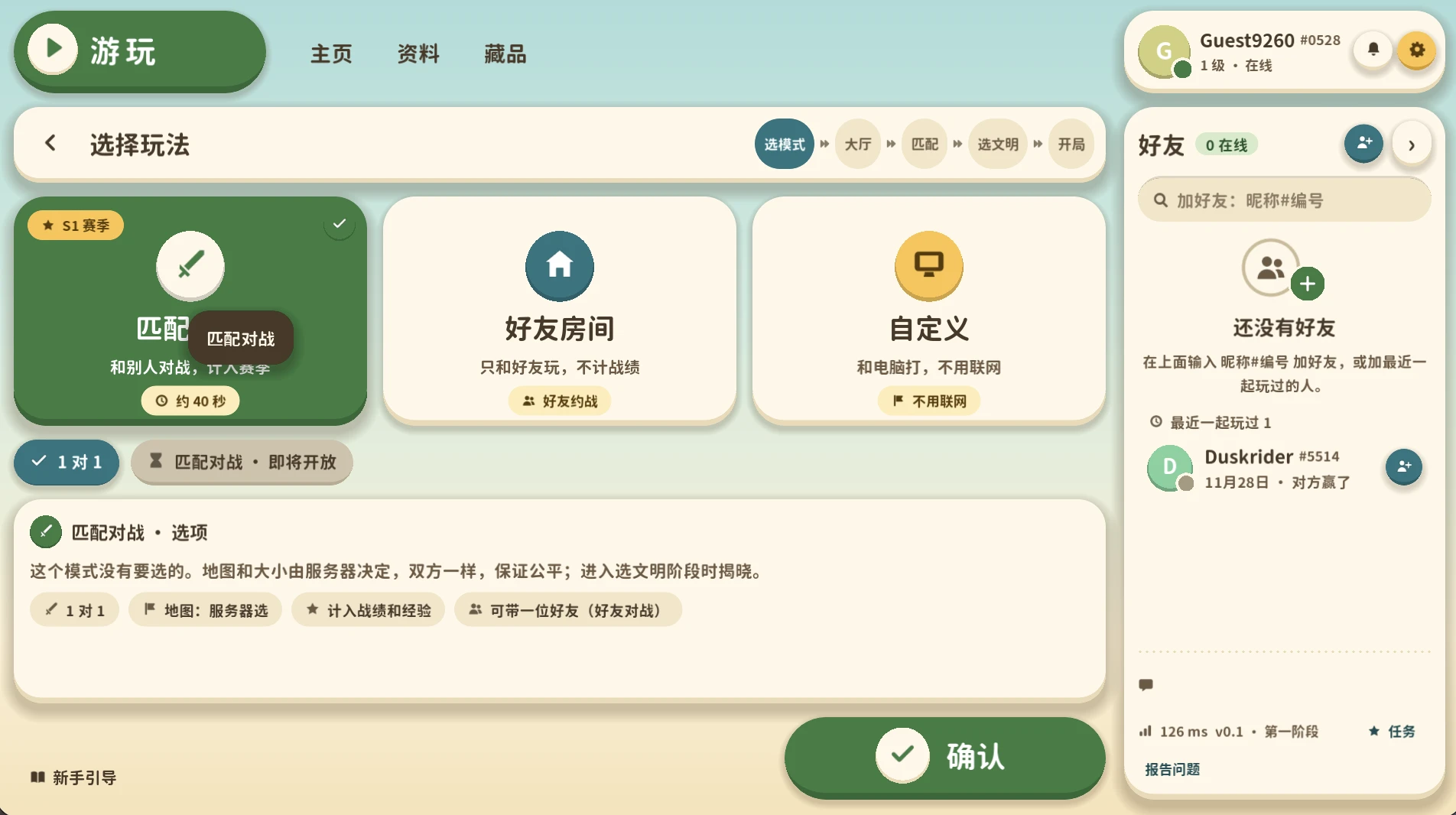
- Select a worker, choose a farm and click a valid tile inside your border. Once the farm is complete, send a worker there with a right click. Build a timber camp near trees to pay for more buildings.
- Select your town centre and start Military I when you have 120 food. After it completes, select a worker, build a barracks and train infantry. Press I to return to the barracks after checking your economy.
- Send a small group to scout. The map and starting positions can vary, so reveal the terrain before sending your army towards an enemy centre.
Play modes, friends and rating
You can register a guest account later from Profile and keep its match history and level. To change your look, go to Profile → Edit player card → Choose avatar. The gallery starts with six original portraits and shows the current selection. Choose a character, then confirm to apply it to your card. Choose Cancel to keep your current avatar. Your nickname and banner colour are also editable on the card.
- Public matchmaking. Choose Play and the matchmaking card, confirm and stay in the queue. The server assigns the map. Select a civilization when the match is ready. During the beta the server can supply an AI opponent when few people are online.
- Friend duel. In Friends, enter the nickname and four-digit tag from the player’s card, for example Guest0783#5791. Send a request and have the other player accept it. With both players online, open Play → Friend room, create the room and invite the friend. Confirm readiness before starting.
- Custom game. Choose the map, teams, population limit and computer difficulty. Use this offline mode to learn a build order or try a new civilization.
The leaderboard after Collections ranks players by competitive rating. Finish a scored public match to appear. Public AI matches count at half the weight of a human match. The top 100 are ordered by Glicko‑2 rating, with ties sharing a place. Friend rooms and offline custom games do not change competitive rating.
Resources and trade
| Resource | Where to work | What to check |
|---|---|---|
| Food | Farm | A city supports up to five farms, including construction sites. Expand to another city if the first has reached its limit. |
| Wood | Timber camp by a forest | The number of forest tiles within two tiles of the site determines how many workers can work there. |
| Ore | Mine by an ore deposit | Mines use the same placement rule. Camps and mines need at least two suitable resource tiles and can provide up to eight jobs. |
A completed, stable city supplies one food and one wood every three seconds. An idle worker looks for a free job after five seconds. To choose a specific job, select the worker and right-click the production building. Check the available slots if assigning another worker has no effect.
Build one market per city and select it to exchange stocks. Each lot sells 100 units for another resource. At starting prices 100 wood buys 66 food. All players share the prices, so check the current quote before selling again.
Farm construction costs 60 wood for one worker slot. A timber camp costs 50 food, a mine 80 wood, and a market 40 food and 120 wood. Assign miners early if you want a steady supply of infantry or research materials.
How a granary boosts your farms
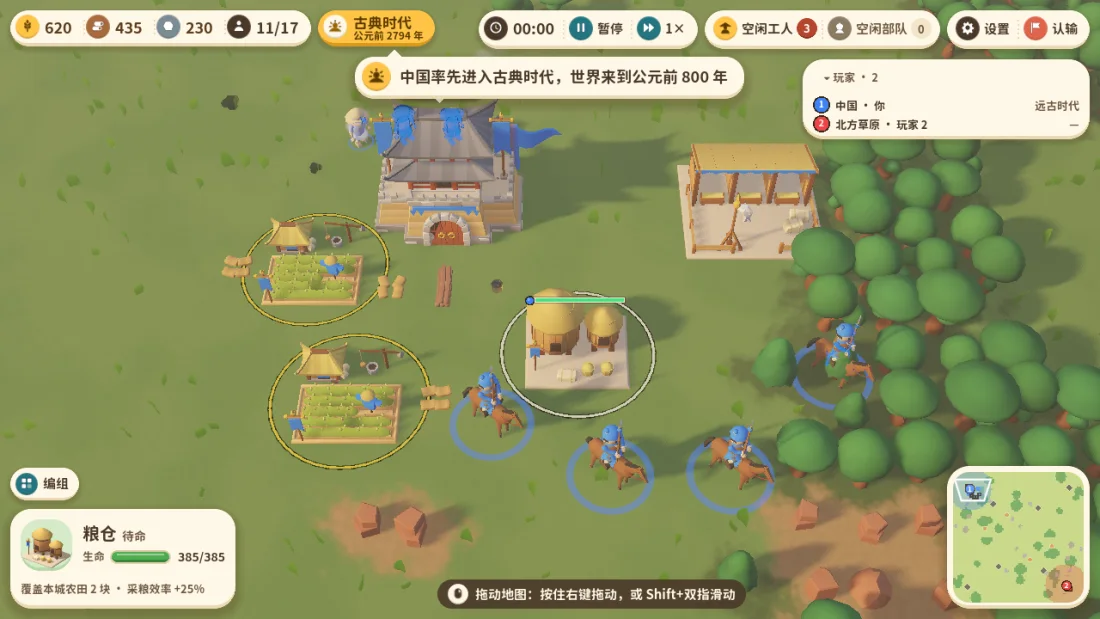
Select a worker, open the Economy tab in the build menu and choose Granary. Available from the first age, a granary occupies a 2 × 2 site and costs 100 wood. One worker takes about 20 seconds at normal speed. Move the preview between cities to compare sites. Gold rings mark the completed farms that would benefit, and the placement hint shows their count. Each city allows one granary, including a queued build order. Once completed, the granary makes workers on that city’s farms gather food 25% faster, regardless of distance. Assign a worker to each farm you want producing food. Select the granary to highlight its farms again, or select a farm to inspect its bonus.
Extracting oil in the Industrial Age
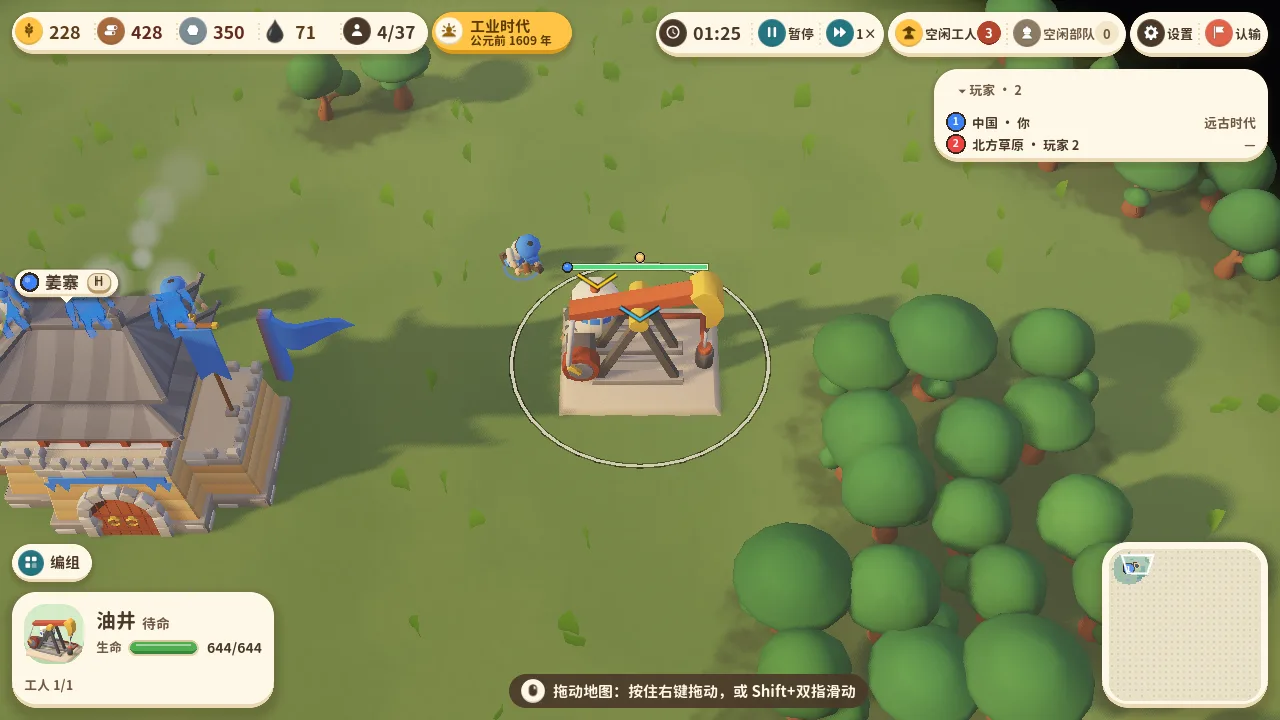
When your nation reaches the Industrial Age (Age VI), land deposits appear on explored ground. Select a worker, open Economy in the build menu and choose Oil Well. Click a deposit inside your borders to align the well automatically. A well occupies 2 × 2 tiles and costs 100 wood and 50 ore. The builder starts pumping when construction finishes. Each well has one worker slot and produces about 1.28 oil per second at normal speed in the Industrial Age. Production stops when the worker leaves. The oil drop in the resource bar shows your national reserves. The cost of advancing to the Industrial Age stays the same.
Lumber mills and smelters
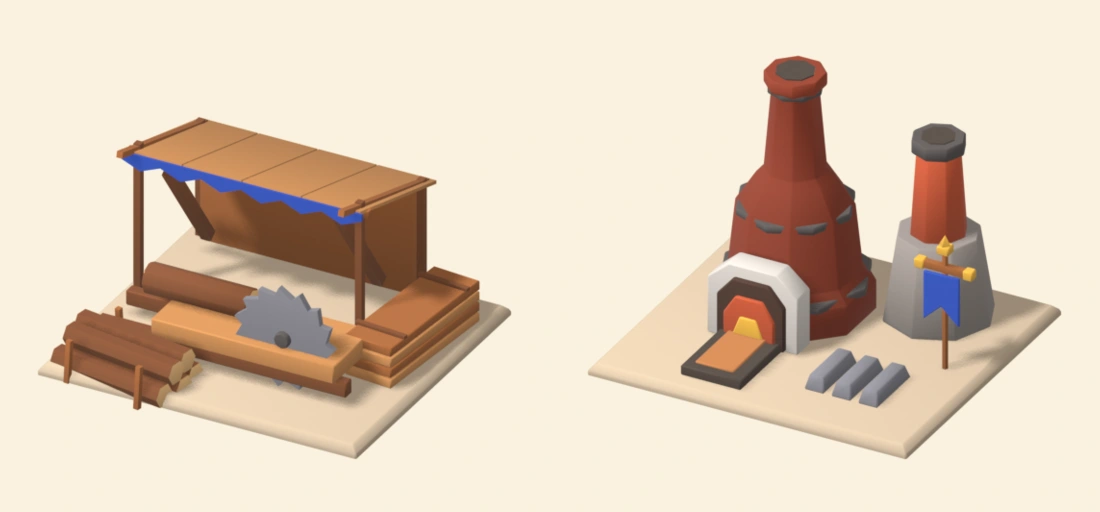
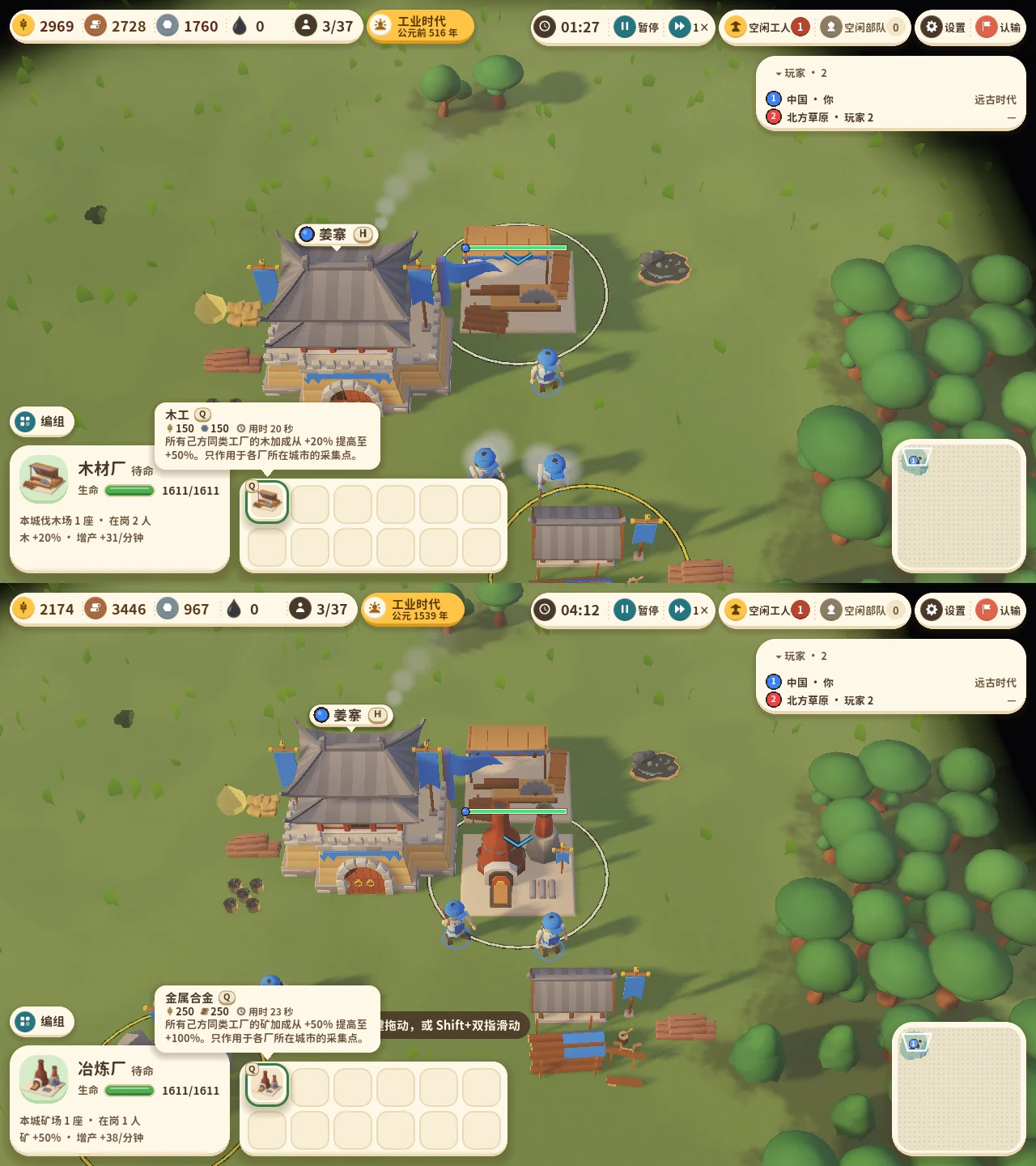
From the Classical Age, select a worker and open the Economy tab in the build menu. Each city can have one lumber mill and one smelter. Each occupies 2 × 2 tiles and takes a single worker about 67 seconds at normal speed. A mill costs 60 food and 40 ore. A smelter costs 70 wood and 50 ore.
Before placing the building, check how many completed camps or mines it covers in its city and how much more they would produce per minute with their current workers. Select the completed building to see the current production gain. Empty camps and mines count toward coverage but contribute zero production.
For example, four Classical Age woodcutters produce 252 wood per minute before bonuses. A new mill adds about 50 wood per minute at +20%. Reassign two of the workers and the gain halves.
Select a completed mill or smelter to research its next tier. Each line is researched once for the nation, in order. Existing and future mills or smelters in other cities use the same researched tier. Each city needs its own building to receive the bonus. The percentages below are totals relative to base output.
| Building or upgrade | Age | Research cost | Time | City bonus |
|---|---|---|---|---|
| Lumber mill constructed | Classical | — | — | +20% |
| Carpentry | Medieval | 150 food, 150 ore | 20 s | +50% |
| Logging industry | Gunpowder | 250 food, 250 ore | ≈23 s | +100% |
| Papermaking | Industrial | 450 food, 450 ore | 30 s | +200% |
| Smelter constructed | Classical | — | — | +50% |
| Metal alloys | Gunpowder | 250 food, 250 wood | ≈23 s | +100% |
| Cold casting | Enlightenment | 350 food, 350 wood | ≈27 s | +150% |
| Steel | Industrial | 450 food, 450 wood | 30 s | +200% |
Cities, barracks and defences
- Town centre. Train workers and start research here. Every stable city provides 12 population slots. To found another city, select a worker, fit the whole site inside your territory and leave at least 11 tiles between city centres.
- Barracks. Complete Military I to unlock construction. A completed barracks trains infantry, archers and, from Age II, heavy infantry. To set a rally point for newly trained troops, select the barracks and right-click the destination.
- Tower and fort. A completed tower or fort within five tiles of your city centre prevents an enemy from claiming the fallen city while the defence stands. A fort also projects a fixed nine-tile territory radius. Leave at least eight tiles between a new fort and each of your cities and forts.
If training is unavailable, select the producer and check its construction progress, required age, resources and population cap. Clearing a job at a mine frees a work slot, but the worker still counts towards population.
| Building | Cost | Availability or range |
|---|---|---|
| Town centre | 300 wood + 100 ore | Make room for the whole site inside your border. |
| Barracks | 150 wood | Military I. |
| Tower | 115 wood + 50 ore | Shoots up to six tiles. |
| Fort | 225 wood + 150 ore | Age II and Military II. Shoots up to seven tiles. |
| Temple | 120 wood + 80 ore | Age II. Build near the city you want to strengthen. |
Workers cost 50 food each and can build, gather and repair. Infantry cost 50 food and 20 ore. Archers cost 30 food and 40 wood and shoot up to five tiles at base range. Heavy infantry cost 70 food and 50 ore. Several workers can build together, with diminishing returns from each extra builder.
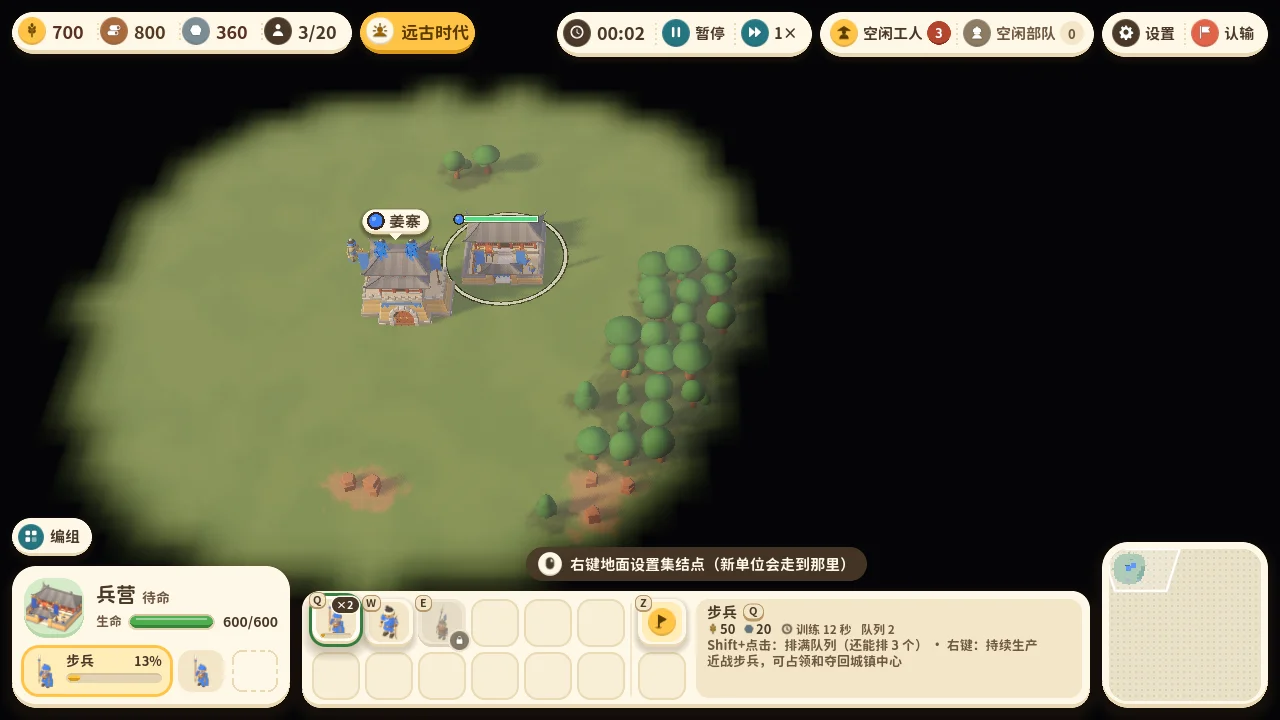
Stables and cavalry
In the Classical Age, select a worker and open the Military tab in the build menu. A stable occupies a 3 × 3 site and costs 175 wood and 25 ore. One worker builds it in about 30 seconds. Select the completed stable to train cavalry for 60 food, 40 wood and two population slots, taking about 11.7 seconds at normal speed. Use cavalry to flank archers for 1.5× damage. Infantry attacks against cavalry have a 1.6× multiplier. Cavalry armour then subtracts two damage, with a minimum of one per hit. Bring infantry or heavy infantry to seize a fallen city.
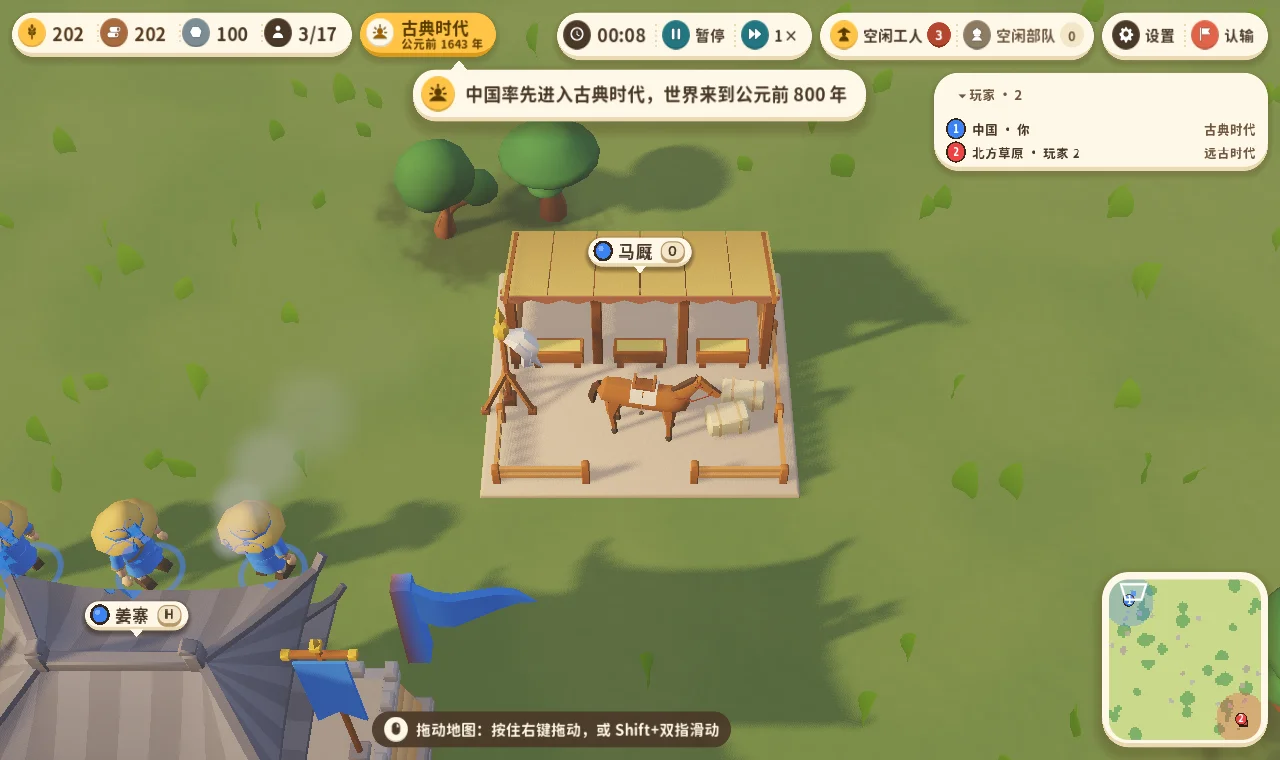
Upgrading cavalry at a stable
Press O to select a completed stable and centre the camera on it. Press again to cycle through your other stables. Rebinding the shortcut in Settings also updates the key shown on your buildings.
Select one of your stables to see the next cavalry model, its research cost and progress. Once you reach the required age, order the upgrade. When research finishes, your existing units in this line convert together and future recruits use the new model. Research the upgrades in order.
| Age | Stable unit |
|---|---|
| Classical | Light Horse |
| Medieval | Light Cavalry |
| Gunpowder | Elite Light Cavalry |
| Enlightenment | Hussar |
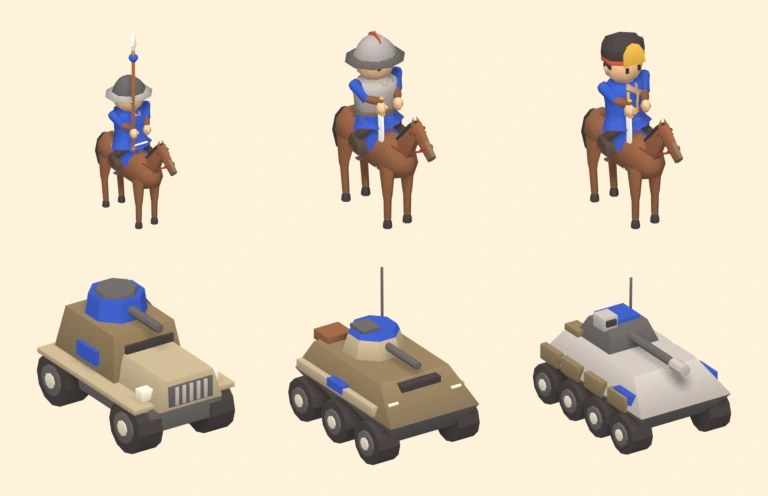
| Industrial | Armored Car |
| Modern | Armored Scout Car |
| Information | Armored Cavalry |
From the Industrial Age, upgrading to and training armored vehicles both cost oil. Build and staff an oil well, then check the price at the stable.
From the Medieval to the Enlightenment Age, each upgrade costs 120 food and 80 wood and takes 23.3 seconds. From the Industrial Age, each upgrade costs 180 food and 80 oil and takes 25.1 seconds. Each new vehicle costs 90 food and 40 oil, uses two population slots and takes 12.5 seconds to train.
How the stable changes
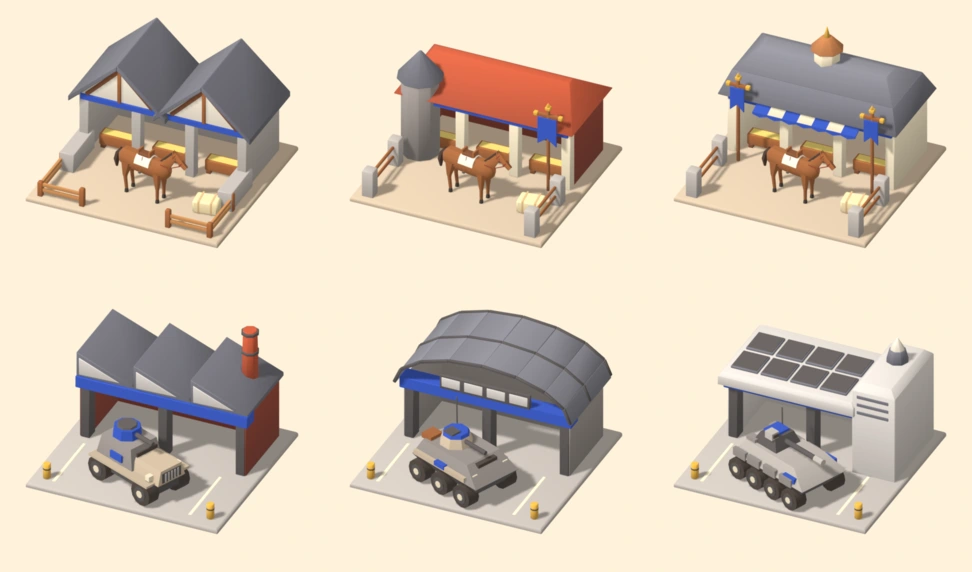
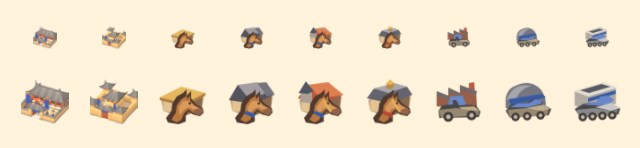
Every stable in your nation reflects its cavalry research. The early buildings keep horses in the yard. Completing the Armored Car upgrade changes them into vehicle workshops. The next upgrades bring a scout vehicle workshop and an armored cavalry factory. Press O to select them at any stage.
Civilizations, ages and military research
Choose a civilization before loading the map. During the match select your town centre to inspect the next age and its cost. Save the required resources, start advancement and check the age indicator when it finishes. WindReign has nine ages. Beyond the first, each adds five population slots. Later ages also improve soldiers, building durability and gathering speed.
| Military level | Earliest age | Cost |
|---|---|---|
| I | I | 120 food |
| II | I | 100 food + 100 ore |
| III | II | 160 food + 200 ore |
Each completed Military level adds 20 population slots, up to the match limit. Military I unlocks the barracks and Military II is required for forts. Military and Civic projects share a research slot across your cities. If another city is already researching, wait for it to finish.
The beta offers China, the Northern Steppe and the Western Steppe. Your choice determines city names and visual style. The nine ages are Ancient, Classical, Medieval, Gunpowder, Enlightenment, Industrial, Modern, Information and AI. The first advance costs 400 food, 300 wood and 200 ore and takes about 60 seconds at normal speed.
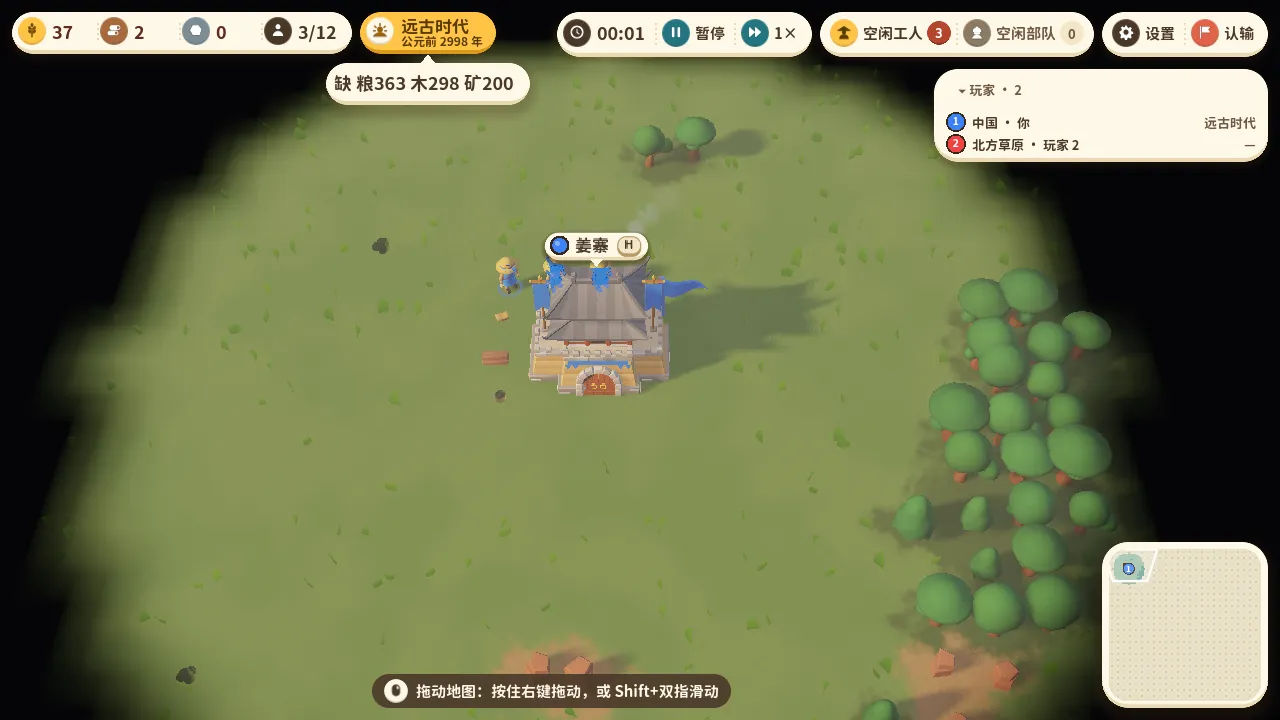
You can also advance by clicking the age badge at the top. An eligible selected town centre takes priority. Otherwise, the eligible town with the lowest ID advances. Hover to see the town, next age and cost. While advancing, the second line replaces the year with the responsible town and its progress percentage. The year returns when advancement ends. The AI Age is the final age.
Click the age badge to see what resources you still need. The message points to the badge.
Infantry upgrades at the barracks
Press I to select a completed barracks you own. With the default layout, press R for infantry, T for ranged infantry or Y for heavy infantry. You can also click the matching button. Each line advances separately. Reach the required age to research its next model. Your nation can run one research project at a time.
When research finishes, soldiers in that line refit in place, keeping their orders and current health percentage. Soldiers already in the training queue and future recruits receive the new equipment. Infantry gain ranged attacks with their Gunpowder model, heavy infantry with their Enlightenment model.
| Line | Train one unit | Research the next model |
|---|---|---|
| Infantry | 50 food, 20 ore · 12 s | 100 food, 40 ore · 24 s |
| Ranged infantry | 30 food, 40 wood · 12 s | 60 food, 80 wood · 24 s |
| Heavy infantry | 70 food, 50 ore · 16 s | 140 food, 100 ore · 32 s |
The table gives the common names. Some civilizations have their own early names. Heavy infantry can be trained from the Classical Age.
| Age | Infantry | Ranged infantry | Heavy infantry |
|---|---|---|---|
| I | Club fighter | Slinger | Shield bearer |
| II | Spearman | Archer | Heavy infantry |
| III | Pikeman | Crossbowman | Armored infantry |
| IV | Arquebusier | Hand gunner | Halberdier |
| V | Flintlock musketeer | Grenadier | Guardsman |
| VI | Rifleman | Jäger | Assault infantry |
| VII | Infantry | Machine gunner | Paratrooper |
| VIII | Mechanized infantry | Sniper | Special forces |
| IX | Exoskeleton infantry | Drone operator | Combat robot |
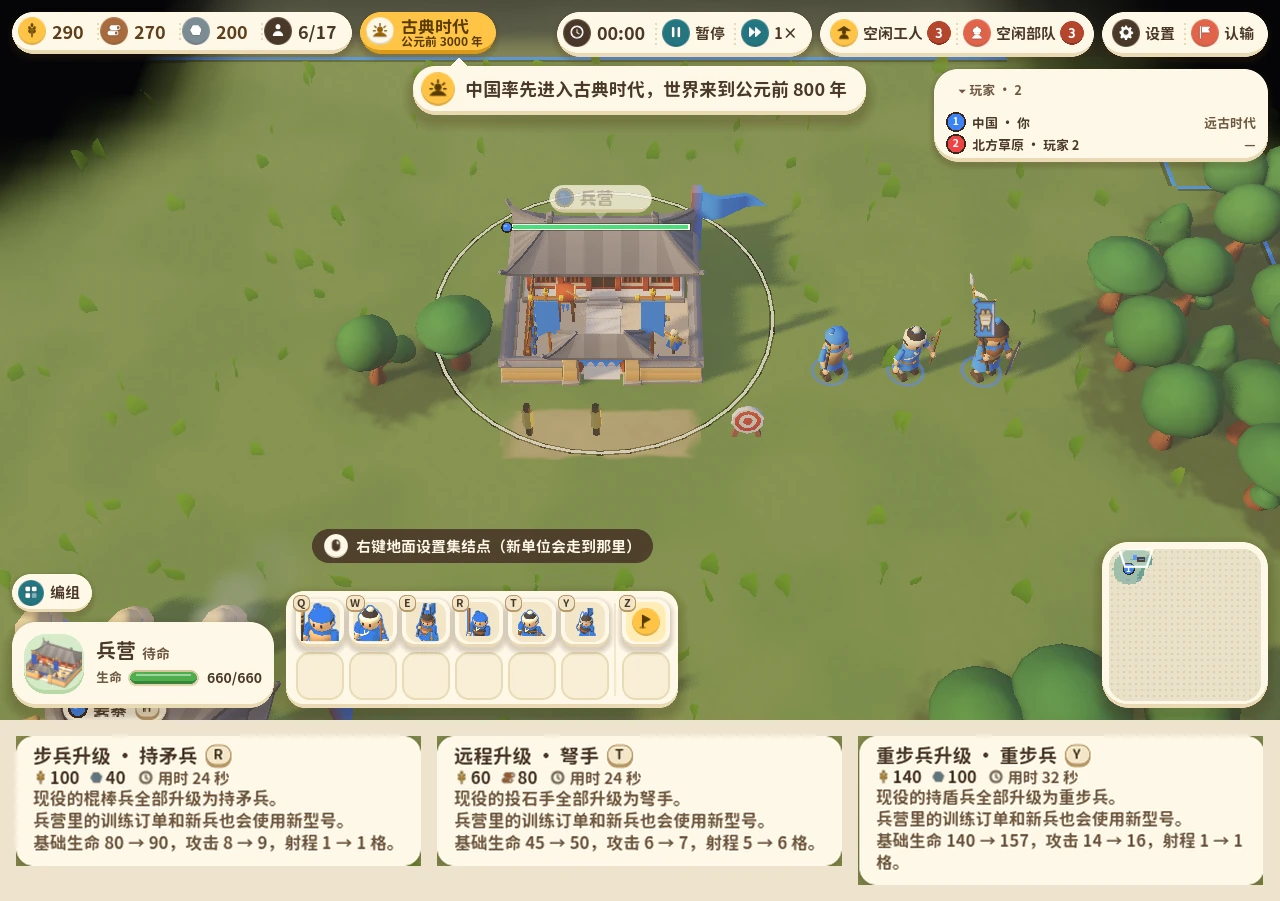
Read the attack type and interval
The barracks shows the time between attacks before and after an upgrade, in seconds at normal game speed. A shorter interval means more frequent attacks. An arquebusier can fire from 6 tiles away, with 1.4 seconds between attacks compared to 1 second for a pikeman.
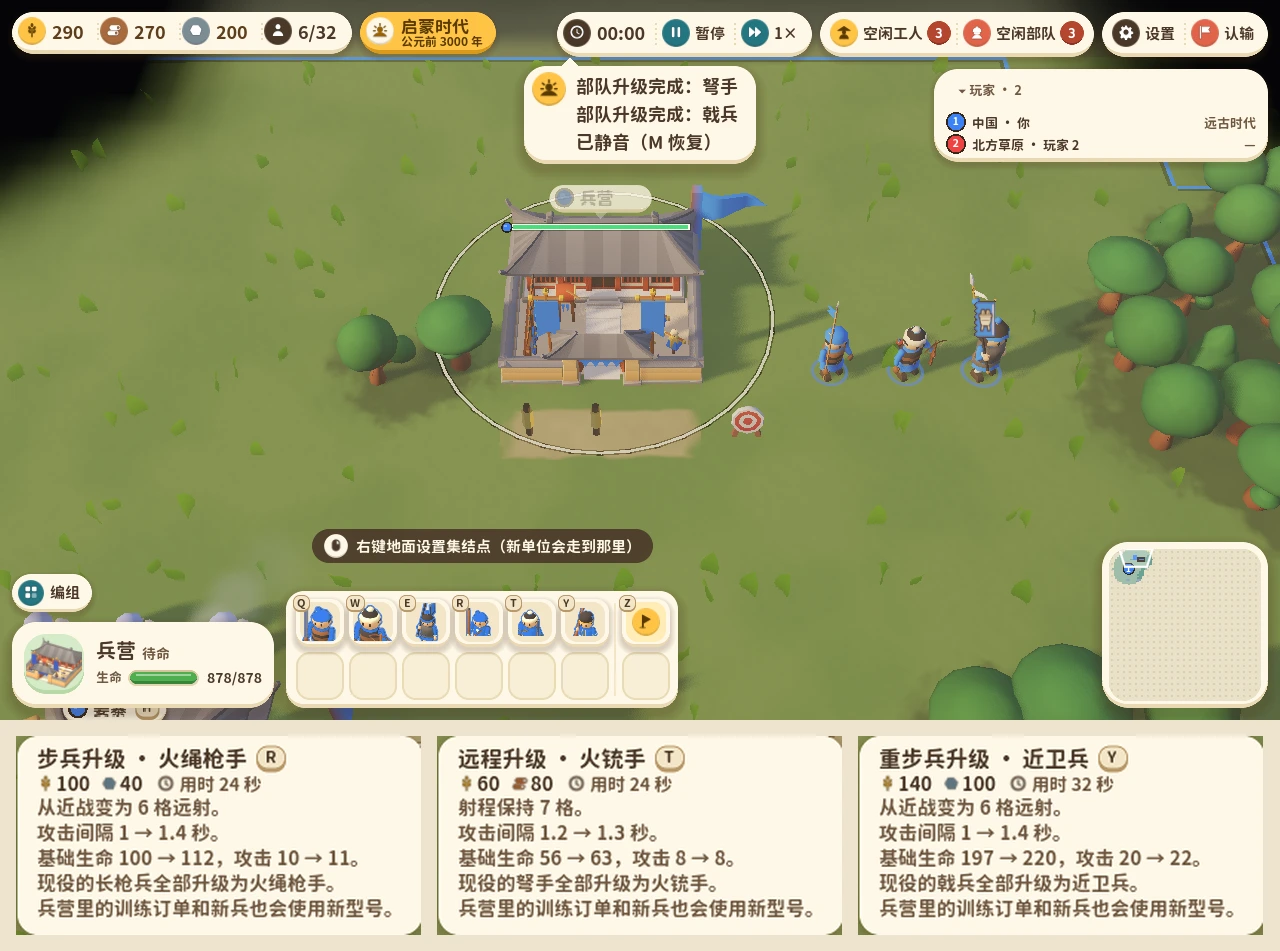
Temples and city defence
Applies to WindReign 0.1.22 and later. From the Classical Age, a worker can build a temple within 6 tiles of a completed friendly town centre for 120 wood and 80 ore. Each city can have one temple. On completion, its city gains a fixed 3 tiles of territory radius and its town centre opens fire on visible enemy units in range.
| Stage | Civic required | City max health | Range bonus / actual range (tiles) | Cost / research time |
|---|---|---|---|---|
| Temple completed | — | +25% | +1 / 6 | — |
| Religion | II | +50% | +2 / 7 | 70 food + 70 wood / 16.7 s |
| Monotheism | IV | +100% | +3 / 8 | 150 food + 150 wood / 23.3 s |
| Existentialism | VI | +150% | +4 / 9 | 300 food + 300 wood / 30 s |
Select a friendly temple to see its city, current bonuses and next upgrade. Research the three technologies in order at any friendly temple. Each is researched once per nation. Existing temples keep their previous bonuses during research and all receive the upgrade on completion. New temples use the current national level immediately.
For example, with Monotheism a temple doubles its town centre’s maximum health and gives it a range of 8 tiles. The border bonus stays at 3 tiles. Cities without temples receive none of these benefits. If a temple is lost, its city loses the benefits.
N — Select and centre the camera on a completed friendly temple. Press again to cycle to the next one. You can rebind this key in Settings.
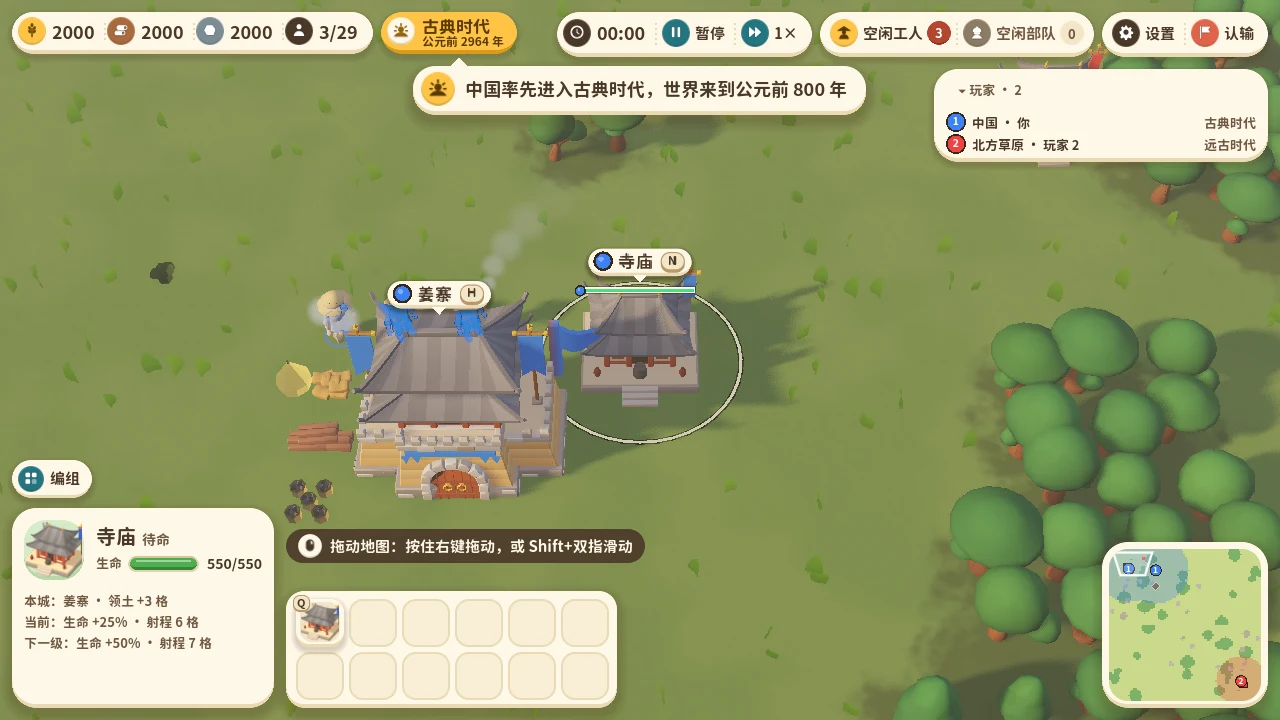
Civic research and borders
Research Civics at any completed town centre you own. Each level increases the base territory radius of every city you own, including cities you build later. Military research has its own levels. Only one research project can run at a time.
| Civic level | Base radius (tiles) | With temple (tiles) |
|---|---|---|
| 0 | 16 | 19 |
| 1 | 17 | 20 |
| 2 | 18 | 21 |
| 3 | 19 | 22 |
| 4 | 20 | 23 |
| 5 | 21 | 24 |
| 6 | 23 | 26 |
| 7 | 25 | 28 |
A completed temple adds 3 tiles to the radius of its own city. Select a town centre to see the actual radius including its temple bonus.
Civic levels I–VII first become available in Ages I–VII respectively. Select a completed town centre outside assimilation, open research and compare the current and next radius. Finish the project to update every friendly city. A fort keeps its own nine-tile radius.
Build a single temple within six tiles of its city centre. At the initial level, it gives the centre 25% more maximum health and a range of 6 tiles. Religion research strengthens its defence. For example, at Civic IV two cities both have radius 20. Finish a temple in the first and its radius becomes 23, while the second remains at 20. Competing enemy influence can still constrain the border you see on the map.
Each Civic level takes one quarter of the resources and time for advancing from its required age to the next. Civic I costs 100 food, 75 wood and 50 ore and takes about 15 seconds at normal speed. Where borders overlap, the stronger influence controls the tile. Equal influence leaves a neutral tile.
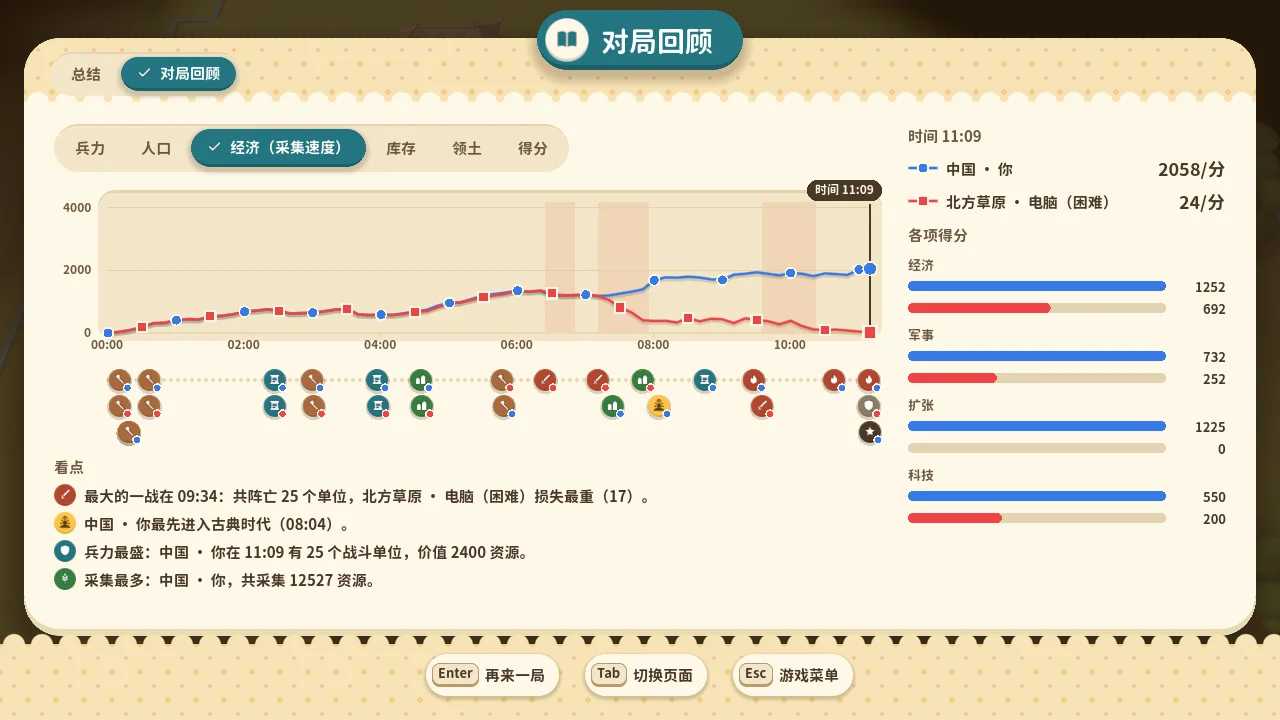
After a match, open the Territory chart in the match review and use the arrows by the border map to step through changes. Colours identify each player, and timestamps show when founding a city, capturing one or completing Civic research changed the borders.
City capture and victory
- Scout the target. Find the town centre and check for nearby towers or forts. If a completed enemy tower or fort protects the city from within five tiles, destroy that defence first.
- Reduce the town centre to zero health, then move infantry or heavy infantry within two tiles. Archers can help damage the centre. You need the infantry at the city to take ownership.
- Defend the captured city through assimilation, normally two minutes. Its former owner may still retake it. A player who loses their last city may therefore remain in the game while recapture is possible. The last remaining team wins.
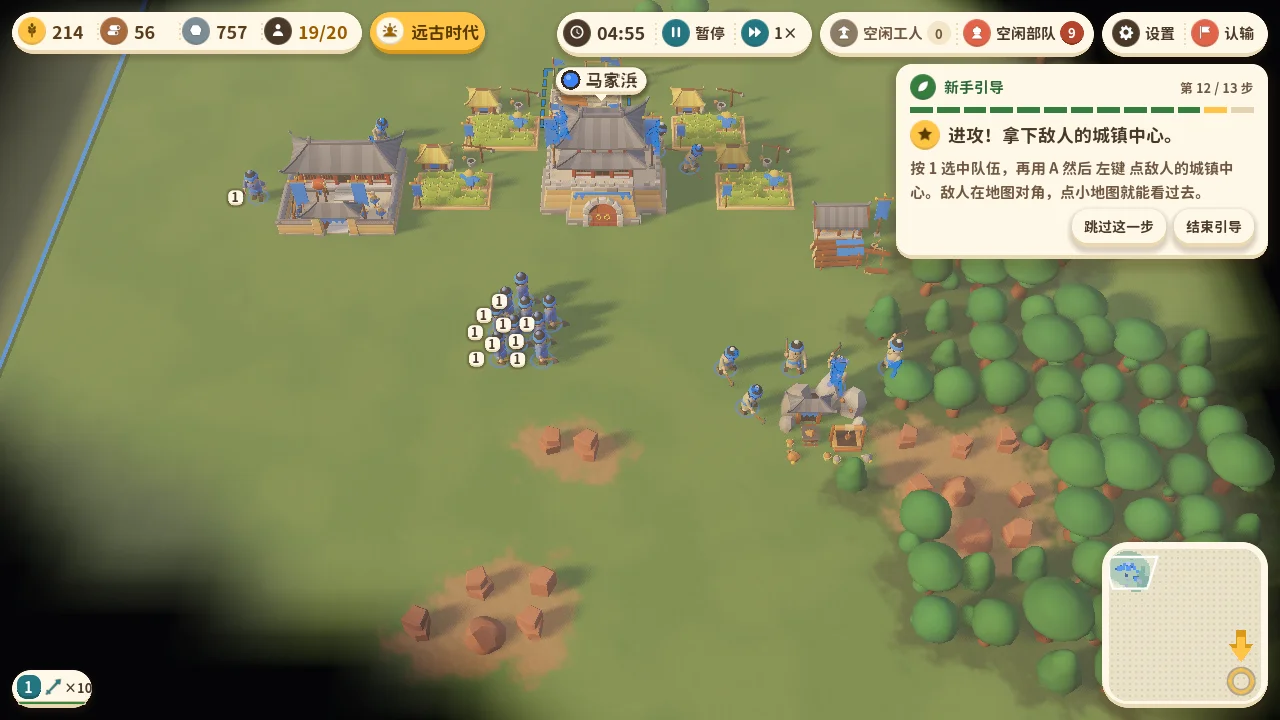
During assimilation the affected land is neutral and neither side can place new buildings there. If the former owner recaptures the city, control returns immediately. If the last teams are eliminated simultaneously, the match is a draw.
Classical Pioneer
The first nation to reach the Classical Age earns Classical Pioneer on the results board. Nations reaching it on the same simulation tick share the title. Valid online matches verified by server replay count in Collection. Offline awards appear on the match results only.
Keyboard shortcuts
- H
- Cycle through your town centres
- I
- Cycle through your barracks
- O
- Cycle through your stables
- N
- Cycle through your temples
- B → 2 → Q
- With a worker selected, choose Build, Military, Barracks in sequence, then click to place
- .
- Select the next idle worker
- A → Left click
- Attack-move to the clicked location
These are the default bindings. If you have remapped a key, check the shortcut on the in-game button or in keyboard settings.
| Default keys | Action |
|---|---|
| Shift + . | Select all idle workers. |
| , / Shift + , | Select the next idle soldier or all idle soldiers. |
| Right click / Shift + Right click | Give the selection a contextual order, or add it after the current order. |
| R → Left click | Order selected workers to repair a damaged friendly building. |
| S / X | With units selected, stop or explore. With a producer selected, X clears its rally point. |
| ⌘ / Ctrl + 1…9 / Shift + 1…9 | Assign the selection to a numbered group or add it to an existing group. Press the digit to recall the group or press it twice to centre the camera. |
| F1 / Esc | Open the controls reference or cancel the current action. |
| F5 / F9 | Quick-save or load in local games. |
Troubleshooting
- Why is a friend missing from search?
- Ask them to read the nickname and tag from their current player card, including leading zeros. Enter the full nickname#1234 and make sure both games are connected to the current test service.
- Google sent me back to the game, but where is my session?
- Return to the original WindReign window. If it still reports a connection error, check connectivity, let the startup update finish and start a fresh sign-in from the game.
- Why is the barracks button unavailable?
- Check Military I at your town centre, select a worker and inspect the resource cost. Use I to select an existing barracks. Use B → 2 → Q to start a new one.
- Where do I report an issue?
- Use Report an issue in the lobby. Include the WindReign version, game mode, what you clicked and what happened. For installation or sign-in issues you can also use the support email below.
- Why is Friend room greyed out?
- Confirm that both players are signed in, online and up to date. Ask a friend who is in a match to return to the lobby before inviting them. Custom practice is available offline.
- Why did only one city gain territory?
- A temple affects its own city. For nationwide growth, finish Civic research and compare the radius shown on each town centre.
Version 0.1.22
Temples activate city defence and offer three national religion technologies. Select a temple to compare current and next bonuses. Press N to cycle through your temples.
Version 0.1.21
Lumber mills and smelters Two city processing buildings and six national production upgrades are available. The placement preview and building panel show coverage and additional production per minute. Match rules have changed. Open older saves and replays with the release that created them.
Version 0.1.20
Equipment comparisons and file compatibility Saves and replays show version information and link to archived installers. Barracks upgrades show attack type and timing. Update failures explain the cause, and the version label follows the selected language.
Version 0.1.19
Oil and cavalry upgrades Develop oil deposits in the Industrial Age, upgrade cavalry at a stable and refit three independent infantry lines at the barracks. The simulation rules have changed. Open local saves and replays from 0.1.18 or earlier with their original client.
Version 0.1.18
Granaries increase output at city farms. Stables train cavalry. During advancement the age badge shows the city and progress. The results include Classical Pioneer and a territory replay.
Version 0.1.17
Player cards now include a portrait gallery. The first collection contains six characters, and new portraits appear here when published. Select a portrait and confirm to use it or cancel to keep your current avatar.
You can also advance by clicking the age badge at the top.
Version 0.1.16
Civic research now expands city borders. Town centres show their territory radius, and I cycles through your barracks.